Almost Evacuated Off Kilimanjaro, She Still Made the Summit
Conversation
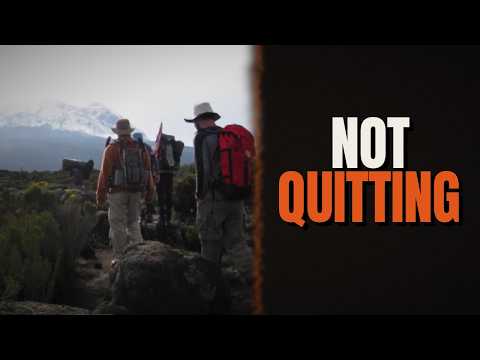
Summary
Jes shares her climb of Mount Kilimanjaro, originally a fundraiser to raise awareness for pulmonary hypertension, which turned into a fight with dehydration, low oxygen, cold, and altitude sickness. Six months after leaving an abusive relationship, the climb became a test of her own strength. Guides, she notes, separate struggling climbers because “failure is contagious.” The episode also opens with some of our odd household habits.
Key ideas
- Jes climbed Kilimanjaro six months after leaving an abusive relationship, and it became a test of her own strength.
- Guides separate climbers who are likely to quit because “failure is contagious.”
- Even when your body is completely spent, you can draw on mental and emotional grit you didn't know you had.
Takeaway
When the body is depleted, the mind still has a say; you are the one who decides whether to quit.
Chapters
- 0:00 Preview
- 1:20 Welcome
- 2:13 Our oddest habits: eggs and the cat
- 8:06 Kilimanjaro with no experience
- 9:19 Giving ourselves our patients' disease
- 14:06 Why half of climbers fail
- 20:56 What the guides and porters taught her about poverty
- 25:56 Getting sick and almost evacuated
- 27:04 Failure is contagious
- 36:53 Summit night
- 39:43 Passing out and pacing her heart rate
- 44:58 Walking past the people who quit
- 46:42 Six months out of an abusive relationship
- 47:57 The summit at sunrise
- 51:54 The lesson
Full transcript
we're going to talk about conquering mountains what mountain are you talking about he's like Kilimanjaro and I'm like Kilimanjaro who it's the tallest mountain in Africa mhm I think it was just interesting to other people because they're like you guys want to give yourselves the disease your patients have so you can see how they feel like that's that's unusual interestingly 50% of the people who attempt to climb kill Mao fail failure is contagious I I was I had never in my life been so depleted and so empty as I was that moment right I didn't know it at the time but the guides had
kind of talked and had decided that uh if I didn't make a comeback by morning they were going to evacuate me off the mountain only person on Earth that will determine whether or not I'm going to fail as me so tell me did you make it to the summit welcome to unbroken From the Ashes I'm James Ash and I'm Jessica Ash and today we're going to talk about conquering mountains is that like the figurative or are we getting into to the real deal like the real mountains real mountains yeah you've done more than I have but uh we can talk about them they were just
little mountains just just a little guy oh they are I I don't they're not like Himalayan Mountains well it was one of the seven that you you did so it is a hiking Mountain mostly hiking we'll we'll dig into it we will okay but let's do one of these uh cards I hate these cards you only hate them because the last one we did was super deep wait you're just picking one right out of the middle I am I looked I peaked at the first one so I would know how to answer well that's why I'm going to do one in the middle oh this
is actually not a heavy one unless you make it really weird what's your partner's oddest habit oh do you want me to be honest yeah let's let's be relatively honest and we can just cut it out if it's if it's too strange uh arst Habit um you have to walk around Barefoot even like after you had foot surgery and like you do everything Barefoot it's kind of weird I thought for sure you're going to talk about the eggs the eggs the eggs what how I organize the eggs oh my God that is right that is crazy oh my God so so you it like like
if I take if there there's you know 18 eggs in the carton and I've used six of them and I put it back in the fridge invariably when I come back you have rearranged them so they're in some geometric shape that's symmetrical throughout the carton I have a reason for this it's ridiculous so I have a reason for this that has become kind of maybe a fixation perhaps but there's a reason you think perhaps yeah so there was a time freaking crazy go I would grab the carton of eggs out of the fridge and they were unbalanced and all the eggs were on one side
away from the side that I was holding and it tipped and I lost like six eggs and they all fell and broke so now when the carton is balanced and you pull it out of the fridge it all it stays in your hand it's balanced it's nice it's like you're the freaking egg egg organization fery that goes in there and like moves eggs around you're like Ping all them up getting your germs all over no why are you touching the eggs to balance them you're like putting time and energy into moving it doesn't take it doesn't take that much time it's like 3 4 seconds
now to make this more odd uhoh confession I will often use an extra egg than I was intending to cook it in order to get it's an even number in order to get an even number in fact right now you are never again going to have an even number of eggs I'm going to sabotage you so in fact we'll do some we'll add this in but right now it's bothering me because we had eggs for dinner and it's not symmetric why didn't you make an extra one if the P wasn't big enough we I had already made 13 eggs for the both of us why
didn't you make 12 because I had already started cracking them and everything and okay and and I got to like all right that's probably enough eggs for the pan I looked over and I then I rebalanced the eggs after I started cooking them and it it wasn't symmetric so when we're done with this I'm taking a picture and sticking it in the video podcast it's bothering me oh my God so maybe that might be my oddest habit that that is pretty odd but what would you say your oddest habit is since I did a little confession oh I'm [Laughter] perfect um I routinely wear mismatched
socks no I mean that's cool I have a habit of hating the cat and it's it's a farce I did not believe it was a farce M much to our son's uh you know pain and hurt why do you hate the cat why he's so nice he's so cute well I mean you're terribly allergic to him yeah so I'm like don't touch me I think the the first day that I realized I might like him a little bit um you were not there uh so it was just me and the two boys and pumpkin or cat got his claw stuck underneath the fridge and he
started screaming and then he's flopping around his whole body's flopping around and he's screaming and I thought oh my God he's going to break his leg it like it was going to happen it was going to break and and I run over and he's clearly stuck and the only thing I could think to do is get the fridge off of them and so I just without even thinking about it Sumo deadlift the fridge mhm off the floor and I said you know get his arm out and so one of the boys runs over and he's under there and he gets his nail unstuck from whatever
it was stuck on and then the cat gets out and he runs away I'm like oh awesome and they put the fridge down mhm and Tyler walks over and he goes you do love the cat so but I don't think this is an odd habit though I think this is I wouldn't call this a habit like my egg thing that's a habit no you're you're interrupting my story Sor so so then he told me that I'm a tsundere do you know what a tsundere is I didn't know what a tsundere is it's an anime thing it's an apparently an anime thing but he explained to
me it's somebody who uh they they act like they hate somebody like vehemently hate them but it's really because they love them so apparently that's me I don't I don't watch any enemy so I don't know I don't yeah I don't understand I don't know if I just put a label on myself that that is messed up but that's I don't know that's what you know but that was when I first said okay maybe my behavior is showing that I might like them but and really I don't like them I was just worried about the Heartbreak you would have child if if we had to
put the cat down we'll Circle back to what your actual odd habit might be I'll have to think about this one as we talk okay because that that's not it okay so let's talk about mountains so that's kind of why we sat down today okay um we've done a few mountains we've done a few together you've done some before we got together and so let's start way back at the beginning you the first Mountain you've done you didn't do any training mountains before you did Kelly right no the the only major hike I had done was uh Grand Canyon I did a rim to River
to rim and that was your first big hiking Adventure ever of any kind that was how I learned how to backpack actually I didn't learn anything I there there was limited resources YouTube didn't exist and I uh put weight too much stuff into a backpack that didn't fit me and I wore the wrong clothes and got lots and lots of blisters and you had the monster on your back yes I had monster so uh but that was the only like big adventure I had done and I was working at a hospital in heart failure Cardiology and pulmonary hypertension that means high blood pressure in the
blood vessels in your lungs right and it leads to your heart failing and it is a rare disease uh it uh often happens in younger adults particularly women and it is it is it's incurable um the only way to cure it so to speak is with a lung transplant right and uh you know there's a lot of medicines that have come out that patients can live longer uh but it is um a progressively fatal disease but that was my specialty for 16 years so I'm working in this hos Hospital uh along with another uh a heart failure cardiologist and he said just I want to
climb a mountain to you know as a as as an awareness campaign and a fundraiser for PHA which is an organization uh for this disease State and the reason why is because when we go into high altitude that is a cause of pulmonary hypertension albeit it's temporary when you come back down out of altitude it goes away got it so so part of the altitude sickness is that it gives you a temporary pulmonary hypertension and then when you reduce altitude it dissipates yes yes so so the bottom line is we would be giving ourselves the disease that our patients have and I was just like
whoa that is so cool CL what mountain are you talking about he's like Kilimanjaro and I'm like Kil a who I had no idea what that was and uh so then I like looked into it and like that's the the mountain that you always see like when you watch The Lion King in the beginning like in in Tanzania and Kenya uh it's actually right on the border it's the tallest mountain in Africa M and so it's one of the big seven like you said uh and uh and the big seven meaning there's a series of seven mountains the the tallest mountain in East continent
yeah yeah so uh he invited me to Tom along with him and a few other uh uh docs and uh other healthcare providers who were going to do this track in the end there was only three of us me and oh wow two others I had about four months to train for this leading up to it you know I was trying to do hikes at least twice a week uh every weekend I was you know hiking you know with weight in a pack so I guess rucking I didn't even know the word rucking at the time sure and I would usually go for about 78
hours and just go as far as I can and uh and I was trying to learn that was when I first learned like how how to layer clothing right and how do you pack a rock basically I lived at REI the guys there knew me every time I'm walking in they're like oh what are you working on now because I had to buy everything right from the the sleeping bag the boots the socks everything and uh so I had a a rapid education about backpacking and mountain climbing uh now uh Kilimanjaro, the mountain, it's 19,341 feet, some people say 19,333, so it's well into extreme
altitude um but uh to put it into perspective Everest is over 29,000 so it's it's not the tallest by any means it's the tallest in Africa sure the tallest in the continental US is something like like 14,400 in change Denali no no Denali is bigger in Alaska oh okay I'm talking in the lower 48 got it uh the the tallest is under 15,000 so Kilimanjaro is 19,300 people like to go to this mountain because you don't really need to be harnessed in with crampons you're not hanging from a cliff by your pinky finger you know that sounds awesome though I won't lie you're not going
to be like Tom Cruz you know doing the reverse you're not rock climbing and you're not ice climbing you're really it's just a hike and a scramble um there are some routes that have a lot of scrambling I actually did one of those routes um but we we never really used ropes there were Parts where I'm like why don't I have a rope this is freaking nuts this ledge is literally this you know a foot wide um but uh yeah it was you know uh totally doable without gear got it and so uh so it attracts a lot of people uh who were newer to
mountain climbing and interestingly 50% of the people who attempt to climb Kilimanjaro fail there is a route that only takes 3 days to get to the top and you don't have time to acclimate and so literally half of those people don't make it to the top because they just you know get a big hard whip ass beating of altitude sickness and they have to go back down yep so for those watching and listening the higher the mountain is uh you know for every thousand feet it takes time to acclimate to that and if you rush through those steps too fast uh the altitude sickness hits
you a lot harder that's why like when people are doing Everest or even to base camp on Everest they'll hike up and then they'll come back down like you know a half mile and sleep there overnight and then kind of ratchet their way up the mountain and it's for the acclimation to the altitude right it's called climb high sleep low right and and actually that's what we were going to do we were planning on doing Everest space camp in October however given the change in life circumstances we had to put that on pause yeah had to put that on pause um but that would have
been a 3- week trip because two the first two weeks you're doing you know acclimation right so uh so half the people on Kelly usually fail because this 3-day trip it doesn't give them enough time to acclimate to the altitude correct correct and we took a western route uh which is a longer uh route it's a six- day Ascent uh well in in Summit night so total of seven days to get to the top okay so that has a 90% success rate okay just more time because you have more time to acclimate it's it's actually a more difficult route um but it's the it's the
altitude sickness that really gets people and so uh the mountain goes through I I think it was five climate zones wow like you start at the bottom you're like in the jungle you know in and uh you're in Savannah and you get so high and then you're in I think it's called heath and moorland which is like large shrubs and lots of rocks you'll get into what's called Alpine desert and it literally feels like you're on the moon oh that's awesome and then once you get high enough it's considered Arctic and uh and there's glaciers uh that we got to see that had to be
a wild experience yeah you know there were I I thought it would be so gradual that you wouldn't notice but there were actually like sometimes there were lines like you could actually see the Climate Zone Changing before your eyes kind of like if you hit the tree line like on Pikes Peak as an example yes like you we we would see um like evergreen trees and then all of a sudden there's none you see rocks yeah it it's the same kind of thing got it and uh and so we were going through climate zones this was my first time walking through clouds like uh you're
we were going along and then we just see like billowy white fog looking stuff come in and we just I'm like oh my God we are inside of clouds right now that's awesome yeah that was pretty cool and uh and and I learned about how mountains have their own weather systems like they're they're so big that they literally um kind like you know if you're around a campfire and no matter where you stand the smoke goes to you it's kind of like that your mass is it has a gravitational Pole right yeah and uh well you know air the air particles are moving more quickly
around your body because you know the bigger you are the more that'll happen that's what mountains do essentially is they they create a weather system right in the mountain itself so I I learned all about these types of things as well so that's the mountain the story behind the mountain is we were doing this for a fundraiser an awareness event and I had no idea how big it was going to get but there were uh patient support groups all over the country who were you know contributing to this following this we started a Blog I didn't even know what a Blog was so all of
a sudden I'm the Blogger and uh and and patients uh were planning Unity walks so they would do like one of their stress tests is a six-minute walk test which is essentially how far can you walk in 6 minutes for pH patients yeah because they're so limited you know you you could be a 45-year-old woman and literally only be able to walk for 4 minutes before you have to stop and catch your breath MH and so the patients were setting up Unity walks so they would walk uh do their walk on the same day that we're doing our Summit attempt and so there was a
lot of energy and a lot of a lot of Hope um that went behind this we ended up making we generated a lot of money a few hundred thousand that's amazing and uh and then we started to get interviewed on like local news stations and we were in like all these newspapers and journals and I think it was just interesting to other people because they're like you guys want to give yourself cells the disease your patients have so you can see how they feel like that's that's unusual right that's not that's not what a typical healthcare worker does and so it had all this energy
and I was the only girl on in our team so I think uh a lot of people are looking to me to uh you know to be successful right I pumpkin is making a show on like a show off on every one of these episodes little turd [Laughter] what up cat hi he's like fine you're going to put me on this table and like put me on display for everyone to look at it's cuz we hate you well don't walk on me don't sit on me no get out of here so before we got cut off from the cat interrupting us yelling and screaming in
the kitchen oh monster you're talking about how um there was a lot of unity walks and a lot of support from the community yeah you know from local media and things like that we had to have you know in Tanzania you have to have uh local tour guides to get onto the mountain so you have to hire uh kind of like the Kilimanjaro version of Sherpa right sure and it was the first time that I actually got to see like a third world country and I got to see real poverty I got to see a cast system yeah like there was a lot of lessons
there that changed my life forever uh because here I'm thinking I grew up in poverty and uh meanwhile you're you know most rich guide has you know shoes that are duct taped together right like they're not getting government cheese right you know I loved government cheese but I I got to eat government cheese right you know there was a guy who uh who actually he was the guy that kind of stayed with me when I was separated from everybody else and I'll go through that but he always had like a handkerchief that he was always holding and we never really thought anything of it and
after this whole thing is over we decide to take a couple of these guides that were really really good to us and invite him to our hotel to buy him dinner so he came and he's sitting there and we look his hand and his hand is mangled and it's clearly like uh has a a chronic infection oh yeah and so we're like what what is this and so he starts to tell us about how he was walking home and he got hit by a car and this is what happened and so we start asking questions so here here's what really happened he gets hit by
a car there's no recourse there's no reason for that car to stop and see if he's okay there's no insurance in lawsuits there's no there's no car insurance to pay for anything there's no health insurance there's no hospital so he had there there there's no lawyers to sue the guy driving the car nothing none of that infrastructure exists right so he got hit by a car now his hand is all jacked up and he has no way of treating it and he had the handkerchief there because if one of his bosses had seen that he had a big injury on his hand they would have
fired him he's the only person in his entire extended family that makes money being a being a guide or an assistant guide on this mountain is one of the most lucrative things you can do in Tanzania like outside of government stuff right and so and they make dollars a day yes yes they make like $8 a day and uh I think the guides make a little more like $15 a day and it's a cast system the the porters the ones who are actually running up and down the mountain with like five gallon buckets of bathroom waste on their heads or uh the food and water
those guys make like five bucks a day wow and they all aspire to do this because it's the most Luc anyway I I got to see um what that looks like for real and it really kind of checked me with my perception of my myself of of oh yeah I grew up in poverty I was rich right is the reality yeah and when we were talking about our stories we you know we we we talked about where we came from but very much we know that what we had was amazing compared to like Tanzania compared to Iraq right you saw it there yeah right I
I think that nothing can replace the value of going overseas and seeing what a third world country really is like uh I think it it changes people forever it makes them appreciate things here in America that most Americans never give a second thought to you know I it's like the other day uh I turned on the stove and it just turned on there was turned on and I'm like I love natural gas like look at this isn't this amazing we you know we have a we have an air conditioner right we just push a button and it just works like you know the the guys
in Tanzania they have an extended family living in a one room mud hut with no bathroom no running water like that's how they lived so yeah so anyway that was uh a big thing for me to see so we start our adventure on the mountain it's 7 days and it's a lot of this climb high sleep sleep low climb high sleep low um and in the beginning I was very much like the cheerleader like I'm encouraging everybody I'm energetic and you know I'm I'm just having a great time and you know I was learning a little bit of Swahili and you know the guides would
play little jokes on us and teach us to say things to other guides which actually translate to something like I'm crazy as a banana um but we didn't know that you think you're saying good morning I think I'm saying good morning so so we were having a really good time and uh a few days into it I started to get sick um I don't know if it was really bad GI manifestation of altitude sickness uh the docks I was with think I probably had food poisoning um but I got really really sick so therefore dehydrated very very dehydrated um at some point when I was
at the sickest I don't think I peed for over a day like 24 hours yeah um and uh that's bad yeah that's pretty bad I didn't know it at the time but the guides had kind of talked and had decided that uh if I didn't make a comeback by morning they were going to evacuate me off the mountain um because uh I was going to just slow everyone else down and I'd have to go back and get evacuated off regardless so uh and they have this thing where um if somebody is very likely to fail they want to separate them from everyone else because and
this is one of the big lessons failure is contagious right you see one person sit down and start to quit and then it makes it okay yes for others to say you know what that looks pretty good I can probably quit too right and I bet you saw that I saw it a lot okay like like in boot camp or in in boot well some in boot camp um but more in like when I was going through through like the Marine Corps martial arts instructor course boot camp is like if anyone starts to slow down a little bit the drill instructors are all over them
and the degree of quit that people are allowed to exhibit is very minimal they don't let you quit they don't let you quit too much and then we actually had one person so this this is wild a little bit of a side tangent but along these same lines I went to a boot camp with one of the guys I was uh I went to high school with and or not he was he was in my area he was the wrestling Captain for his school and he was on the football team for his school and we competed against each other all the time he was in
my platoon in boot camp and big strong dude the the the picture of of physique of uh an Adonis athlete but his mind was a little soft so his his physical skills uh through high school he didn't have to work real hard to become the captain of the wrestling team or the football team so when he got he got to boot camp he's now actually having to work real hard for the first time in his life and he quit oh he said I'm done I quit I give up I fa I I refused to train the drill instructors made him the guide made him like
in charge of the platoon so instead of allowing him to quit they gave him uh exponential responsibility and forced him into a leadership role cuz they knew he had the capacity mhm and they said you're going to quit no we're going to give you more so that's how they managed interesting some people who wanted to quit but in other areas when some some person had a uh like in the Marine Corps martial arts instructor course the the motto is attrition is the mission the the instructors were trying to get everyone to quit we started with like 40 people in my class and graduated like 11
oh wow okay so and that was contagious and that was very contagious one person said oh my my shoulder hurts I'm going to I'm going to be done sure and so on the Mountain uh they want to segregate out people who they think is going to fail and so I remember that night uh when I was struggling really bad um I went to my tent and and I I knew how sick I was and I had a pulse ox which which like you put on your finger and it shows you your blood oxygen level and and typically we prescribe oxygen if like someone has lung
disease if their uh pulse ox reads less than 88% that's like the marker of when insurances will pay for oxygen use and my pulse ox was often uh in the high 70s at that point and so I I knew that I was pretty pretty darn sick and so I go to my tent and I didn't go on the acclimation hike that afternoon cuz every day we would do some big thing in the afternoon where we are uh pushing the altitude you know for some type of acclimatization thing and then we come back and have dinner and go to sleep so you would like find your your
base camp for the day set up mhm do a little hike come back right right and so I opted out for that acclimation hike and I that was a big deal to not do that um and so I'm in my tent and and I start to realize that I was going to fail and I and then I just started like uh for that moment allowed myself to feel sorry for myself and and I started to cry probably for like 10 seconds and I started thinking about like all those patients who were like looking up to me and they all had hope you know that that
was this whole thing was about Hope and here I am failing and it's not even like Summit night I'm already failing and and I and I like no I'm not going to quit I I don't I don't care I don't care what happens I'm not quitting and I dug really deep and decided I I got to make myself drink I need to make myself eat I have to do a plan of how I'm going to keep fluids down so I I'm like okay I'm going to I'm going to dinner and so I try to get out of my tent I'm so weak I can't even
like unzip the door like it took me five minutes to get out of the tent and uh I kind of stumble over to the the food tent and and I go in and everyone was so surprised to see me they were like cheering they were so happy that I actually got up and went to eat mhm and uh and so I I sat down I just had a few bites of food and a little bit of you know sips of water and then after that like everyone kind of rallied around me and you know the the way um when someone's having a GI thing to
rehydrate um orally is you have to do like a sip of water every few minutes cuz if if you do too much you'll throw up right so uh I did that for all all night long all night long I did that trying to rehydrate and so the next morning I felt a little bit little bit better in terms of the dehydration I still had the altitude sickness and the low oxygen levels but the dehydration was a little improved and the uh the guides I didn't know it but they were ready to evacuate me and they're like okay we'll give her another day and see how
she does yeah and uh few hours into to that day's Trek um a friend of mine made me eat like half of a I can't remember what these like uh cereal bars were at the time like a cliff bar or something yeah like a cliff bar and and I'm like no no no they're like no you must eat it and so I I took like three bites and five minutes later I was like hi I have energy it was the first that works it was the first time in my life that I actually had a uh cuz I never went without food we were on
welfare so we always had a little bit of food crappy food but we had food right so it's the first time in my life that I had this clear Association where I am completely depleted and then I get some calories and then poof I'm like I can move and uh so that was kind of kind of crazy to see that so now I'm I'm doing a lot better uh we had the there's a thousand foot wall called the Barranco Wall uh that's all scrambling and it's a wall like a horizontal wall a vertical wall vertical wall that we have to go from the bottom to
the top it's about a th000 feet of scrambling okay and so I was I was doing it and uh at at one point I I'm I'm walking along this ledge which is about like my boot just fit on it so it was you know like less than a foot wide wow and and my hands are against the wall and I have to go from like like from left to right it was probably like 10, 15 feet that sounds awesome and and I'm like why isn't there a rope on me and I'm going across and the the guy's like kissy Rock Jessica kissy Rock and I'm like
don't die don't die and you know but I you know you know I make it it's fine that's awesome up to this point the hardest part was when you were feeling sick yes yes was that the hardest part of the trip or is some night no no Summit night is hard the hardest yeah what we typically did for example is we would hike about seven miles 7 eight miles set up a camp and then we would do an acclimation hike which might be another five or six miles oh okay and then we sleep and the next day we we would go another seven or eight
miles to our just do that each day yeah that was our daily routine y we weren't even cooking our own food like the Outfitter had a had a chef who who would cook our food and boil our water so we we weren't even taking care of those things that you and I are usually doing yeah and I know some guide some hikes when you've got guides and porters they don't let you carry your own pack like I know some some places don't do that do you have to carry a pack or did they not let you carry a pack no we carried a pack but
it wasn't our full pack okay so I essentially had a daily pack and uh and the porter so it wasn't even heavy it was under 20 lbs oh okay so it it wasn't we've done much much more than that um but for for this that was the rules for the Outfitter sure and uh and there were even people who paid like extra to have an extra like their own Porter who would even carry that car their own P yeah and I was like I'm not being I'm not being that guy that guy didn't make it to the top and so so uh so here we
are Summit night so for Summit night you actually start that like at like 11 or 12 midnight M because you essentially you would be ascending a vertical mile so it's like 5,000 ft uh in altitude um and it's uh 7 hour it's about 7 hours so you need to get to the top right so you're arriving right around uh the time the sun comes up and there's two reasons for that one you need to have enough daylight to get back down right and two at night it's you want the ground to be frozen because a lot of it is like loose scree MH and if
it's if it's melted from the sunlight your feet just like sink into it like like sand and so you it's better to go up while it's frozen solid that night uh the guides had told us that it got to be as cold as 80° below zero wow I I don't know really what it was but that's what they told us that's brisk I know that I had water bottles that first of all you have to turn them upside down because as they freeze if they're upside down they'll make it'll freeze a little like Froot Loop shaped thing at the opening and they'll get some water
out there'll be a little hole in the middle so the water can still get out and so I had to put my water bottles upside and these are like Nalgenes these aren't like cheap little water bottles and they were inside Pockets inside like parkas uh close to my body and it still froze so it was pretty cold so you're in a parka in a sleeping bag and they're so and they're freezing I'm talking about once we leave for Su at night oh okay got it okay um we H most of us had um camel backs MH they froze immediately absolutely like within 15 minutes they
were ice and so all we really had were the two water bottles we each stuck inside of our coats cuz that was the only thing that didn't freeze immediately yeah and um and so uh Summit night uh we start we start going and and they say they want you to go somewhat slowly they call it pole pole like slowly because like the altitude is such a big deal when once you're above 15,000 ft if you're not acclimated enough it'll really it'll really get you and so at first I was doing fine the guides are singing Bob Marley we're singing Bob Marley like we're it we're
so excited about this and uh and probably about 2 hours into it I got really lightheaded and passed out um I kind of one of those like where like I kind of know I'm going down um and was immediately aware as I hit and do you think it was from dehydration or from oxygen I'll get there okay and so at this point all I know is I pass out okay and and so I just I just sat there and and uh waited until like the the dizziness and everything was passing and I don't even know when or how it was happening so I was not
aware of what was going on around me but the guides separated me at that point they put an assistant guide with me and they took everyone else including my you know cuz I had had the the two doctors I was with and there were other people from around the world who were in you with the same Outfitter team and the guide said you need to go she needs to stay you need to leave her because they predicted I was going to fail and if they were near me they would have started dropping out and those guides want their stats to be high I was going
say they have a they're incentivized to get everyone to Summit yes they want as many people to Summit as possible so they have the best stats because then people will hire them right they have better stats so if they you know they saw that I was going to fail so they separated me from everybody else and so the the plan was then once I recovered that guide would take me down down off the mountain so uh I'm sitting there and after a few minutes I realized that my head started feeling better I'm not dizzy anymore and he's assessing me he's making sure I don't have
ha or haste which are the life-threatening I'm familiar degrees of of of altitude sickness uh and that means uh high altitude pulmonary edema where your lungs fill up with fluid or high altitude cerebral edema where your brain is swelling and both of which will kill you and the only way to treat it is to get you down out of altitude and so I didn't have those and so I talked to the guide and I'm like you know I think I can keep going and he's like okay and so I started going 20 more minutes I have another slump I didn't actually lose Consciousness but like
I did a slump where I kind of slumped down onto the ground and the same thing happened where I'm sitting there for a few minutes and then it passes and so then I'm like oh I know what's happening like physiologically okay right so number one my my oxygen saturation is dropping below 70 yep which makes people pass out right that's what our happens to our patients uh and two I'm still very dehydrated and I'm checking my heart rate and everything and my heart rate is so high like it was hard to count and and so I'm like okay I'm sitting here and when my heart
rate comes down a little bit the dizziness goes away like oh this makes a lot of sense uh as I'm going my oxygen level comes down too far my heart rate goes so high and my heart isn't able to squeeze enough blood because it's going so fast and so then when you don't get enough blood going to your brain pass out and so um but it made sense so all I have to do is modulate my heart rate interesting okay so I'm like they want you to go a consistent speed they do not want you to sit and rest okay because you'll freeze then you'll
give up and quit so freezing tends to do that so they never let anyone stop yeah and so I'm like okay assistant guide here's what I'm going to do I'm going to keep going and when I start to feel little light headed I'm going to stop and I'm going to rest until my heart rate comes down and then I'm going to go again and I did this for another 5 hours wow where like and I just modulated myself and he let me cuz it was just me and him okay I was going to ask if that was yeah he he let me and uh and
he you know and he motivated me and you know there over and over again I would ask him like how far are we from the top and he'd say it's just over that Hill Jessica it's right there I can see it it's right there there you're almost there and uh so so for me with that modulation I just had to if I slumped like I was passing out I just had to slump away from the cliff side oh yeah like if this were someone I loved doing this I'd kill them but but I had a plan and I wasn't giving up now five hours into
this I had exhausted every mind hack I could think of you know the little train that could or I'm doing this for my son I'm doing this for the patience and I I was you you have nothing you you just think you're in your own mind and I did everything that I could to keep going and not give up and at some point we get we get to this part that I call it the Steep part the Steep part the Steep part as I'm getting up close to that there's no more Cliff it's kind of just like a big wide open area with boulders I
think I see bodies and I'm like oh God am I hallucinating right and as I get closer I see that there people who are like curled up they're they're sitting on the ground or laying on the ground and they're curled up and they're like rocking or throwing up and moaning and these are people who quit because of the altitude sickness and they were like scattered everywhere mhm and then I thought they gave up it'd be okay it'd be so easy it'd be okay if I did too cuz they all did it's okay it makes it acceptable yeah yeah and as soon as soon as that
thought came into my mind my legs stopped working like I stopped and it I wasn't able to like make my leg go for like I was so empty I I was I had never in my my life been so depleted and so empty as I was that moment right and uh I tell people uh because I did a lot of public speaking about this event afterwards I tell people and it's true that I thought about Ray and Bob my the other two doctors having their picture taking at the summit without me and I'll be damned if they're going to do that without me.
I shamed myself into finishing um that got me a few more steps yeah and uh what I what I didn't tell people then because I kept it very private was um this this all took place within six months of me getting out of that prior relationship that was abusive and so there was a bit of um this was me proving to myself that I was capable and that I was strong and I wasn't a weak worthless pathetic person that that he convinced me that I was for so long and I needed this I needed to get to the top for myself and prove to myself that I
can so I took another step breathe and another step breathe and that's about the pace you're going mhm because of how high you are and I did that and I was only about 15 minutes from the summit when this all took place and all those people who had quit were 15 minutes they were right there from the summit now the guy told me that but I didn't believe him because he'd been saying that the whole time yeah he said it for the past four hours so of course he's full of it so uh and when I got up there um um the sun was just
starting to come up and Ray and Bob saw me and they just started crying cuz they were so happy to see me like they they kind of lingered for a while hoping to see me they had been there for like 25 minutes or so and so uh they they usually people get up take their picture and they get right back down because that's yeah then you got to descend your your vertical mile in reverse so so people don't ER but um they lingered hoping I would get there and I did and it was wonderful we got to take our Summit photos and uh I was very
I was very out of it then like I think the altitude sickness was I was going to ask do you remember much of of the I flashes of it um and so I don't have crisp memories of it actually um and then as I started to come down the other side and and most injuries happen on The Descent of course uh cuz you're so exhausted yeah uh and you're a little more careless and and that eccentric lowering yourself down is actually much harder on the joints and muscles than climbing yeah and most people don't consider that when they're training so they hike up a
bunch of stairs and take the elevator down so they can get more times going up the stairs yeah yeah I did I did that I was guilty of it I fell a few times going down yeah yeah but I didn't get injured um and as I came down it was pretty amazing amazing like each thousand ft I'm like I I can think again now did you do the whole descent in one day like you did you go from the summit all the way back down to the bottom in one no pass no so um it we we came back down that day during the daylight
and then we had one more camping night okay and we came the next day we descended the other uh I guess it would be well 13,000 ft in one day yeah so um but I could tell very clearly once I got to about 11,000 ft I was like I feel good you know and then I was eating and drinking and you know I felt you know almost normal I obviously very exhausted but uh way better than what I had been doing so um and after that after this this whole Adventure um I started speaking about it and uh you know we we had a satellite
phone and we would call to that organization we were working with and they would uh send it out to all the patients so we were like checking in with them every day and so they were following along I didn't know this was happening but like Ray and Bob were giving updates on me I was too sick okay to do to do the updates so like like these people the patients were like oh my God she's not she she's really sick I hope she makes it so they they were following along you know in suspense and didn't know until the next day if I had made
it to to the top or not yeah um and then uh every other year there's an International Conference uh for for this disease State and me and the two docs were invited to give the keynote address and I'm like I'm I'm just a little physician assistant like who am I giving a a keynote address so that was that was a big deal yeah that like most you know most people in healthcare never ever have an opportunity like that and I'm like all I did was was almost not die on a mountain you know people say I conquered this mountain or I conquered that mountain I've
been on a few mountains no they tolerate you they they the mountain tolerates you yes yeah yeah and the mountain made it made me work a little harder what would you say your biggest lesson was from that oh so hope is contagious but failure is contagious as well and that that's an important powerful uh lesson maybe the bigger lesson for me was that was the first time in my life not the only time the first time that I had pushed my body to the point where there's nothing left as I would believe it and I had to use my mind to make my body keep
going and I saw that it it worked like in any other circumstance I would have never believed that I could possibly have kept going based on what was happening physiologically based on the fact I hadn't been eating you know my kidneys were probably hurting pretty bad right like I shouldn't have been able to keep going but my mind was strong enough and I did keep going so that was my first experience with that and that changed my whole life was there any prior life experience that you drew on to or or that you think prepared you for those hard moments I think I've always had
a uh never quit kind of attitude um but had not been tested I hadn't ever pushed myself that far before and actually when I was when I had allowed myself to um be in this abusive relationship that all like Turned backwards right I I lost that ability and you became mousy and uh yeah and and so it broke that Spirit a bit Yeah I well I wasn't broken um permanently right and so uh so so I I was regaining what I already had but this was the first time I actually pushed it to a limit and then had to go beyond that limit um yeah
I had never done anything like that uh in a physical in like a physical grit kind of way um I had done other things that were like mental grit but not uh not with physicality like that m were you looking for something in particular no I was just curious um because I I know that you know a lot of the things that we've we've gone through physically and emotionally and mentally there's been things in our lives that we would look back on and draw from to either give us perspective as to like hey this thing that we're doing right now is not so bad I've
done XYZ before or you know I talked about boot camp and I I had the the example of the Marines and the Frozen chosen hey if they can do that then I can do this right you know so often times there's some kind of thing that's an inspiration I didn't know if there was anything that as you were going through this that stood out to you it wasn't another example that was an inspiration um most most of the things that I had been successful at uh like like um dedicating all of my time and resources to being valedictorian for you know any big thing
that I attempted to do I was actually channeling anger um because I hated when someone said that I can't MH you know I'm like you know McFly you call me chicken like like I uh people believed that I could become valedictorian well mfer I will show you and so a lot of a lot of uh My Success I I I had this kind of like sassy attitude and and I but I channeled it and I made it productive um so when I was on the mountain I didn't have I didn't have any role models that had done anything like that I knew I knew
guys that had been in the army that dropped out some point like I didn't have I didn't have good role models for this kind of thing at all it was just your own will to continue your own never quit mindset yeah I was my own example MH I and and you know I didn't have people in my family that had done anything like that yeah um you know but I probably looked up to uh you know Bruce Lee um and uh you know there there were things like that but um I I didn't I didn't have any personal experience uh or story that I could
draw on it was just I couldn't quit I'm not going to be a failure and and the only and the only person on Earth that will determine whether or not I'm going to fail as me is that the lesson then I haven't really thought of it that way but yeah I guess so that would be the primary one I like that we'll do other Mountains on a different one yeah this was this was this was good and I think it was if we were to try to talk about Pikes Peak or Mount Rainier or my first experience in Pikes Peak when I got really
sick you weren't I didn't know you then but that was a really bad experience and it twisted some of my my memories that kind of affected our hike on Pikes Peak yes yeah we had some some good story it's right there so I don't think we would do those Justice to try to cram them into this okay episode so we'll do those on another day yeah we'll we'll have another other Mountain yeah I like it there's Kilimanjaro and then the others so lesson for today you know failure is contagious but the only thing that will determine if if you're going to fail or not is
you I like it all right awesome so we don't say this very often but it would really be awesome if you would like this video And subscribe to our Channel and do the notification Bell thing so you can see when we put more episodes out there and and share it yes yes share it cuz we have like we we only have our like my mom's watching I know that right so if you find any value if if this is valuable to you share it and encourage other people to watch it and if there's something that we've touched on that you want us to dive
deeper into or for those that know us and know some of our stories if there's something that we haven't talked about yet let us know what that is and we'll dive into those things too sounds good cool so all right make it great good yeah you're good I got eyebrows now you actually have eyebrows now we should also make sure that we like have um expressive hands okay be careful with your less less expressive hands less expressive hands let's have expressive hands I just flipped the [Laughter] table welcome to unbroken from the asset from the asses all right woo


